
Why Cross Functional Teams Stop Trusting Each Other
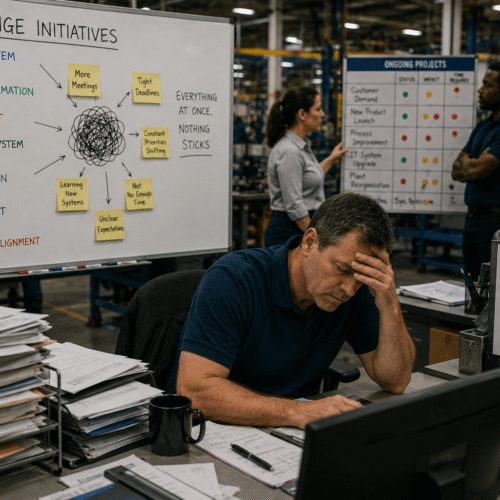
If you’ve ever left a meeting frustrated because operations, quality, engineering, maintenance, or supply chain couldn’t seem to get on the same page, you’re not alone. Maybe the conversation felt more like a debate than a problem-solving session. People defended their positions, challenged one another’s priorities, and left the room no closer to a solution than when they started.
Many manufacturing leaders assume these situations stem from personality conflicts or poor communication. While those factors can contribute, the real issue often runs deeper. Over time, when departments struggle to align priorities, trust begins to erode. Teams stop assuming positive intent and start questioning each other’s motives. Collaboration becomes more difficult, and the organization pays the price.
The Real Reason Departments Struggle to Align
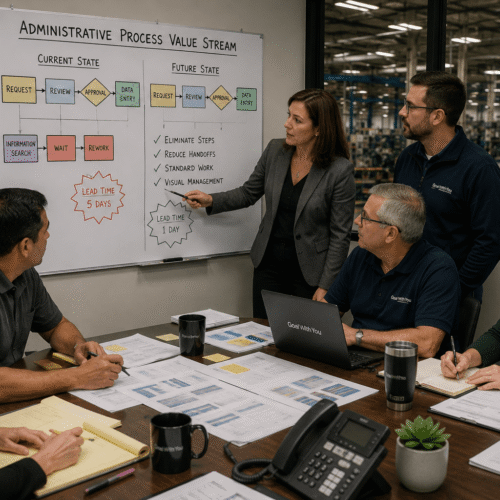
More often, the issue is that each function is focused on a different objective and has conflicting individual success measures. Production is trying to hit output targets. Quality is focused on compliance and reducing risk. Engineering wants to optimize processes. Supply chain is working to keep materials available and inventory under control. None of those goals are wrong, but problems emerge when departments become so focused on their own priorities that they lose sight of the larger organizational goals.
How Misalignment Creates Distrust
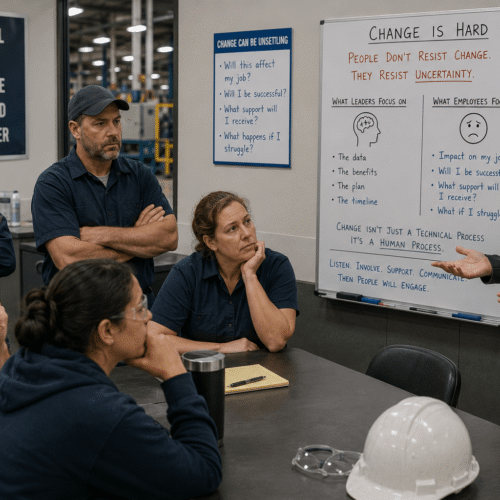
When that happens, conversations become more defensive. Teams begin protecting their own interests instead of solving problems together. Assumptions replace collaboration. Trust starts to erode, and before long, people spend more time debating ownership than addressing the issue itself.
The Leadership Responsibility: Creating Alignment
As a leader, one of your most important responsibilities is creating alignment.
Ask yourself:
- Do performance measures encourage collaboration or unintentionally create conflict?
- Do team members understand how their decisions affect other departments?
- Do they understand the priorities and challenges their colleagues face?
- Are departments working toward shared business goals?
Often, improving collaboration isn’t about changing people. It’s about helping people see the bigger picture.
Strong Teams Focus on Shared Success
The strongest cross-functional teams don’t succeed because everyone agrees all the time. They succeed because everyone understands how their work contributes to a common objective and when they can succeed individually while maintaining flexibility for the better good of the organization. When that alignment exists, trust becomes much easier to build and maintain.
About the Author
Mandy Rhine is the Founder and Principal Coach and Consultant of Goal With You, LLC. She helps manufacturing and operations leaders strengthen leadership effectiveness, improve team performance, navigate change, and accelerate career growth. Drawing on more than two decades of experience in manufacturing, operational excellence, quality, and leadership, and her training and certifications in Lean Six Sigma, Executive Coaching, and Change Management, Mandy partners with leaders to build the skills needed to influence, delegate, develop teams, and drive business results.