When you think about continuous improvement opportunities, your attention probably goes straight to the shop floor.
That makes sense. Production processes are visible, measurable, and typically fall within your direct responsibility. You can see downtime. You can track scrap, defects, changeovers, and productivity losses. Because these issues are easy to identify, many operational excellence initiatives focus primarily on improving manufacturing activities.
Looking Beyond Production
While the shop floor offers significant continuous improvement opportunities, some of your biggest gains in cost reduction, efficiency, and flow may exist in the processes that support production.
Think about what happens before work ever reaches the floor.
How long does it take your organization to approve a product or process change?
Are there too many approvals required for a purchase order before someone releases it?
How much time do your teams spend searching for information, waiting for responses, updating spreadsheets, attending meetings, or resolving communication issues between departments?
These activities may not directly build your product, but they directly influence how efficiently your operation performs.
The Hidden Cost of Administrative Complexity
Most organizations don’t intentionally design their indirect processes. Instead, they evolve over time. Someone adds an approval step to reduce risk. A report gets created because someone requested it years ago. Teams continue holding meetings simply because they’ve always held them.
Over time, these processes become increasingly complex, creating delays, frustration, and hidden costs that affect the entire organization.
Lean Principles Apply Everywhere
The same Lean principles and tools that improve production processes can also transform administrative, transactional, and support processes as well.
Some common opportunities include:
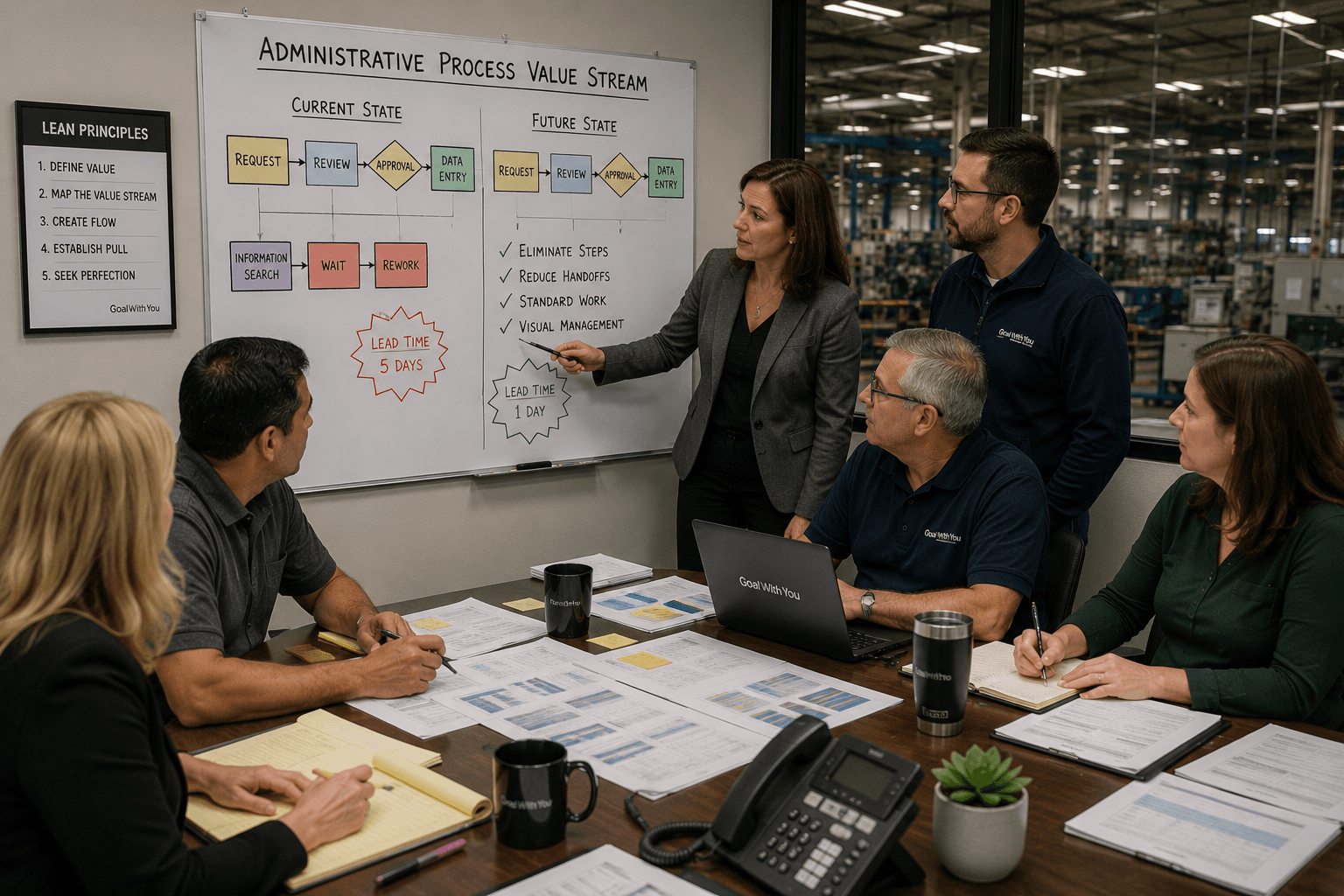
- Value stream mapping can identify delays in information flow.
- Process mapping can uncover redundant steps and unnecessary approvals.
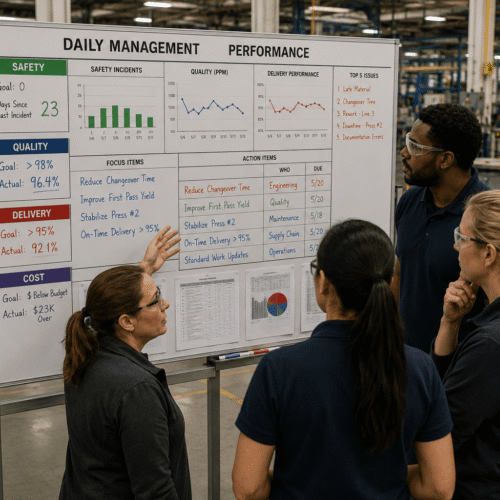
- Visual management can improve communication and accountability.
- Standard work can reduce variation and improve consistency.
- Root cause analysis can address recurring issues that consume valuable time and resources.
A Real-World Example
One transactional process Kaizen I facilitated focused on hiring and onboarding. The existing process delayed bringing quality candidates into the organization and getting them productive quickly.
The team mapped the current state, identified waste, and redesigned the workflow together. As a result, they significantly reduced lead time while creating a better experience for hiring managers, new employees, and HR..
Waste Exists In All Processes
The reality is that operational excellence can be used for any process, even above the shop floor. Waiting is still waiting. Rework is still rework. Overprocessing is still overprocessing. And unnecessary complexity still creates cost, frustration, and confusion.
Where Should You Look Next?
If you’re looking for the next opportunity to improve performance, don’t limit your search to production. Take a closer look at the processes that support your operation every day. Some of the greatest gains in productivity, responsiveness, and cost reduction come from improving the systems and processes that support the people doing the work every day.
At Goal With You, we help organizations identify improvement opportunities across both direct and indirect processes. By applying operational excellence principles to the entire value stream, we help leaders uncover hidden waste, improve flow, reduce costs, and build systems that support sustainable business performance.
About the Author
Mandy Rhine is the Founder and Principal Coach and Consultant of Goal With You, LLC. She helps manufacturing and operations leaders strengthen leadership effectiveness, improve team performance, navigate change, and accelerate career growth. Drawing on more than two decades of experience in manufacturing, operational excellence, quality, and leadership, and her training and certifications in Lean Six Sigma, Executive Coaching, and Change Management, Mandy partners with leaders to build the skills needed to influence, delegate, develop teams, and drive business results.