If you’ve ever left a meeting frustrated because operations, quality, engineering, maintenance, or supply chain couldn’t seem to get on the same page, you’re not alone. Most manufacturing leaders eventually find themselves dealing with tension between departments. When projects start falling behind, quality issues increase, or priorities seem to be constantly competing, it’s easy to assume the problem is personality conflicts or poor communication.
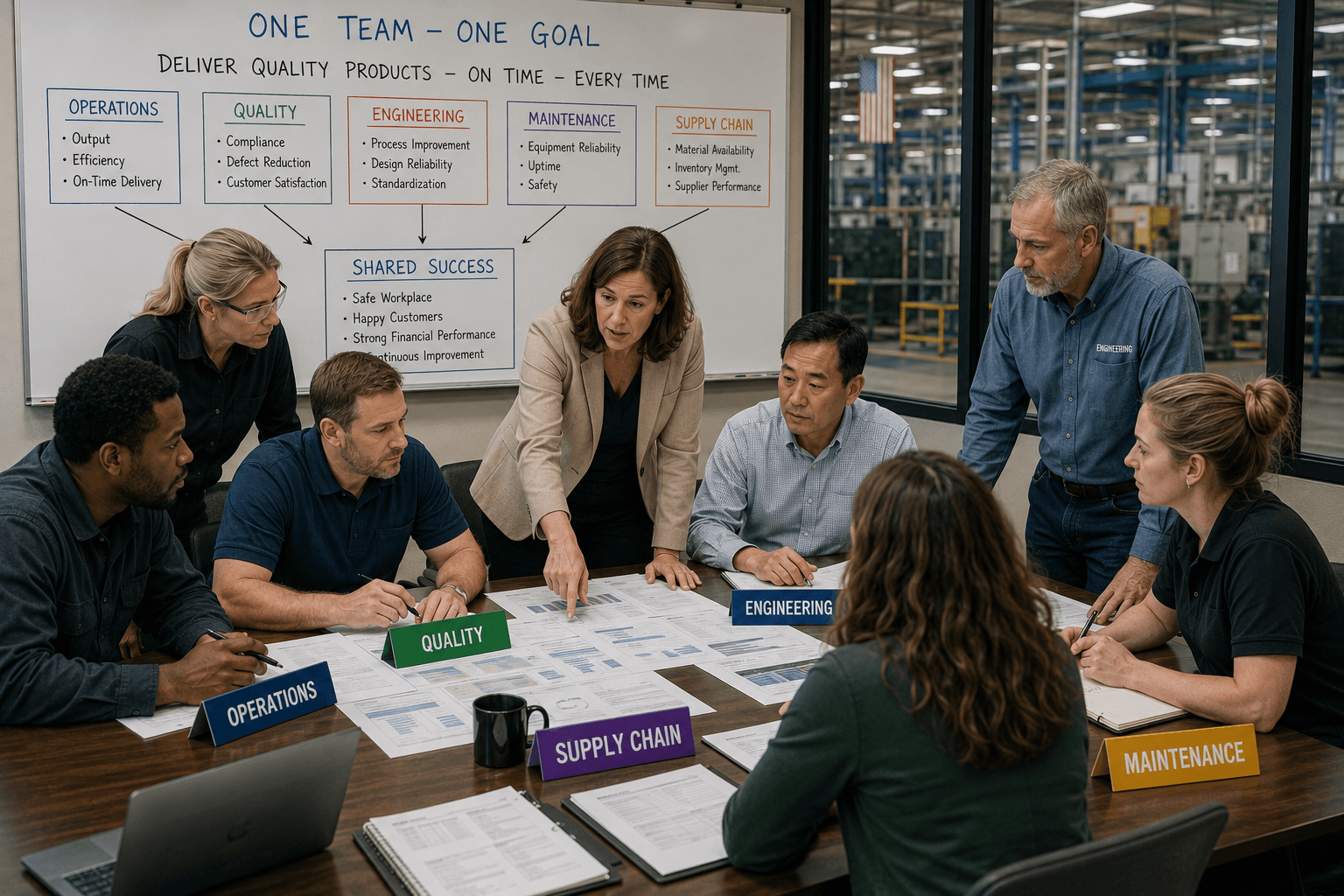
More often, the issue is that each function is focused on a different objective and has conflicting individual success measures. Production is trying to hit output targets. Quality is focused on compliance and reducing risk. Engineering wants to optimize processes. Supply chain is working to keep materials available and inventory under control. None of those goals are wrong, but problems emerge when departments become so focused on their own priorities that they lose sight of the larger organizational goals.
When that happens, conversations become more defensive. Teams begin protecting their own interests instead of solving problems together. Assumptions replace collaboration. Trust starts to erode, and before long, people spend more time debating ownership than addressing the issue itself.
As a leader, one of your most important responsibilities is creating alignment. Do your teams understand how their decisions affect other departments? Are they working toward shared goals, or are they measured in ways that unintentionally put them in conflict with one another? Often, improving collaboration isn’t about changing people. It’s about helping people see the bigger picture.
The strongest cross-functional teams don’t succeed because everyone agrees all the time. They succeed because everyone understands how their work contributes to a common objective and when they can succeed individually while maintaining flexibility for the better good of the organization. When that alignment exists, trust becomes much easier to build and maintain.